Yes, it is another entry about the final project. Since I
have solidified my decisions regarding it, I felt discussing it again was
appropriate. There are some ideas that I want to explore that I cannot really
explore adequately in the paper, because to take the time to find quotes and
actually research both pieces would be too time consuming. Still, I wanted to
take the time to discuss what I can, without quotes, here while I have the
time.
I chose Glee not because I like it, because I had not
watched a single episode until yesterday, but because I had heard controversial
things about it. For all that it appears to support disabled children and gays
it really achieves the opposite. After having watched the first couple of
episodes, I can see where this opinion might derive. Of course, having only
watched the first two episodes, I cannot make a fully informed statement about
it.
For one thing, there are a lot of slurs spread around. Kurt
getting bullied because he is gay happens in every episode, where they make it
a comedy at him getting thrown in the dumpster. People seem to assume that gays
will incorporate typical homosexual traits and, particularly with Kurt, this
occurs. Kurt is not only gay, but he is obviously and unequivocally gay,
exhibiting all the stereotypical behavior patterns. He is afraid of having
tomatoes thrown at him during the school assembly because they will “ruin his
facial”.
I have heard that Glee is more gay friendly than that, and
since I have only watched the first couple of episodes, I suppose I must
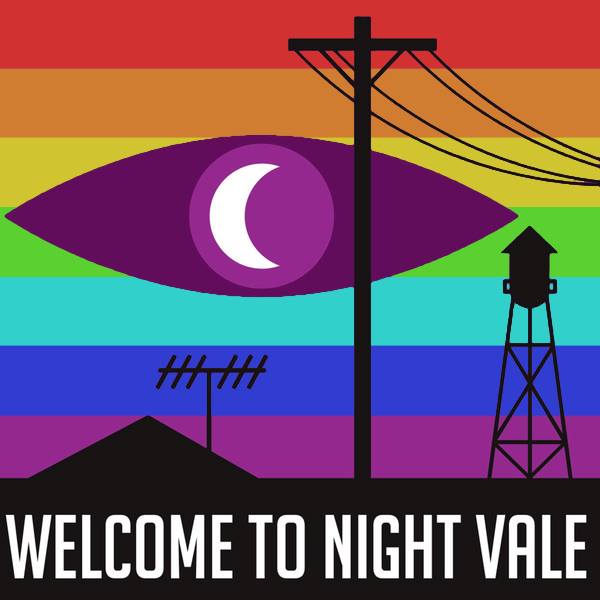
reserve judgment. Yet…I wished to draw a comparison between Glee and Welcome to
Night Vale, a podcast that has drawn a lot of support in the last few months.
Welcome to Night Vale is a mock-radio show where the announcer details all the
very strange occurrences within Night Vale. The radio announcer, played by
Cecil Baldwin, just happens to be gay. (The actor portraying him is also gay).
This is not treated as a major event. Rather, the response
is more akin to: “Cecil is gay. So what? We have a five-headed dragon running
for mayor, a glow cloud dropping dead animals on everyone, doppelgangers
running around, a dog park with mysterious hooded figures that we are not
allowed to enter, and so many other strange things that really, Cecil being gay
is a non-issue.” That is exactly how the show treats it. Cecil never mentions
being ostracized for his homosexuality. He never goes on tirades about his
sexuality or makes it seem like identifying as gay has really altered much
about his life.
The listeners only discover he is gay when he mentions
Carlos (“beautiful, sweet Carlos”) at which point most listeners usually react
with, “Is he talking about another guy?” Cecil and Carlos eventually, after many
episodes of Cecil gushing about the scientist and condemning the hairdresser
who cut Carlos’s hair, end up in a relationship. This relationship is not
treated as anything extraordinary, although Cecil is very excited about it.
Rather, it is given the same importance and weight as any heterosexual
relationship. One might remark that Cecil/Carlos is the only normal thing about
that town.
This seems like a marked contrast to Glee. In Glee, Kurt’s
homosexuality is a focal point. He behaves like the stereotypical gay man,
whereas Cecil behaves like any ordinary man, save for his fixation on Carlos.
In this way, Cecil seems more human (although there have been fan art depicting
him with tentacles) than Kurt. Cecil is more accessible than Kurt because
Cecil, despite being just a voice on the radio, reacts less like a flat, two-dimensional
character. He is not defined by his sexuality the way Kurt is.
This brings us to another moment. Quinn, as well as the
jocks on the football team, condemn Finn for joining Glee because they think it
is basically ‘homo central’. Anyone with disabilities or showing desire for the
same sex is condemned (they locked the handicapped boy in a porta-potty and had
intended to flip it over with him inside). The idea that such things are
shockingly normal in a show like this
unnerves me. Glee seeks to show how all these misfit toys belong together, yet
it has not shown much solidarity beyond the club.
Again, I realize I may be misinterpreting due to my limited
experience with the show. I have heard every single Night Vale podcast, over 30
of them, and have only seen two Glee episodes. Perhaps once I am ready to
complete my final project, I will have had more exposure to the show that will
alter my opinion.
I just wish that Glee treated Kurt (and Blaine, who comes in
later) as unremarkable the way Night Vale treats Cecil and Carlos. Perhaps this
is only possible in a town where “helicopters circle overhead and we all
pretend to sleep”.
“Good night, Night Vale. Good night.”


No comments:
Post a Comment