Tuesday, November 26, 2013

Dancing With Myself...

I will admit that when I decided to do Glee for my final project, I had not seen a single episode. Since the last time I wrote about Glee and now, I have watched about seven episodes. My perspective on the show has changed and I wish I had more experience with the show, so that I could write about more than the first ten episodes of season one. (I in particular want to watch Blaine arrive and see the relationship between Kurt and Blaine, but I do not have the time to watch the entire series before finals). Today, for my final journal entry, I will discuss an episode in particular and how it deals with democracy, our vision for an accessible school, and the ideals we hope to foster within our society.

The episode, episode 9 in the first season, is called “Wheels”. In it, Artie, the handicapped student, cannot ride the bus to Nationals with them because he needs a handicapped bus that the school cannot afford. In order to show the Glee club students how difficult it is to get around in a wheelchair and what Artie goes through on a daily basis, he assigns the club to use the chair for three hours a day. The viewers see Finn getting smacked in the face, Rachel having problems getting her lunch (and then someone upending her lunch in her face), and having problems getting around in general because they are unfamiliar with the wheelchair.

While this is going on, and after Mr. Shuester has proposed a bake sale to help funds for the bus, Kurt and Rachel must audition for the solo in “Defying Gravity”. Kurt cheers when he hits the high F, a requirement for the song, and then discovers that he cannot take the role. Moments before he arrives in his father’s shop, his father receives a phone call that says, “Your son’s a fag.” As a result of how this affects him, Kurt decides to throw the audition so he is less visible at school and affects his father less.

The third point of the episode (among four, the last of which I will not describe because it really is irrelevant to this discussion) is that Sue must hire a new Cheerio after throwing Quinn off the team. They hold auditions and she selects a girl with Downs Syndrome. Will believes that she has ulterior motives in this and does not understand why Sue treats Becky like all the other cheerleaders. At the end of the episode, we see that the reason is because Sue has an older sister with Downs Syndrome who is wheelchair bound. Sue does not treat Becky any differently because she believes that handicapped people do not wish special treatment, but the same treatment as others.

Will chose “Defying Gravity” because he wanted Glee Club to be more accessible to the judges. Since “Defying Gravity” is a traditional female role, having Kurt sing it would have possibly affected how the judges perceived them. Having a Downs girl on the cheerleading squad would have affected how the other girls perceived her. Artie, in his wheelchair, is well aware of how he is Othered by society, much like Becky and Kurt. While only the trials of Kurt and Artie are depicted, it is possible to imagine that Becky is aware that something does not quite mesh between her perceptions and those of her peers.

Mr. Shuester wants the Glee Club students to use wheelchairs so they can stop assuming that whatever Artie is going through does not affect him emotionally. This places everyone within Glee Club on fair playing ground and is something that students in real life should be able to relate to. Students should be equal and judged, as Sue stated, “not on what they look like, but what they can do”. Had Kurt not thrown the audition, he would have hit the high F. Thus, he would have been judged on his abilities, not on his appearance as a male teenager. Likewise, one would not have deduced Artie, who had previously been a minor character, had such an amazing singing voice because the wheelchair would have caused others to diminish him.

This really speaks to the tenets of our democracy. We are supposed to expect equality and to have students and members of our society provide as much as they are able, regardless of what they look like and their personal backgrounds. Students should overcome their adversity and be able to stand out, without fear of castigation. Although Kurt ultimately decides that he cannot protect his father as he can protect himself against homophobia, it shows that he understands the difficulties that his sexual orientation poses for those around him.

The money the Glee Club raises in its bake sale, along with money that Sue donates to the school, provides funds for three more wheelchair ramps and a ramp in the auditorium. Thus, the school becomes more accessible and a better place for students of all abilities and capacities. Through the wheelchair experiment, the Glee Club learned how difficult it is to maneuver and traverse a world different from their own. A walk a mile in my shoes exercise…of sorts. I think this experience is valuable for everyone and something that students should keep in mind in their future experiences.

This is my last journal entry—I hope you have enjoyed reading them all. I leave you with a video clip of a song Artie sings during the episode.

“Dancing With Myself”.


Saturday, November 23, 2013

Black Friday


Black Friday is a time-honored tradition. Tis the season to be mauled, to trample people, and to scream and camp out while trying to save a few dollars. Tis also the season for workers to be underpaid, overworked, and have little to show for it. South Park recently made fun of this phenomenon in their two-part episode entitled “Black Friday” and “Song of Ass and Fire”. Although I have worked Black Friday, I worked Black Friday in a supermarket. Our BF extends to Thanksgiving and the days leading up to it, but it is not quite comparable.

This year, my boyfriend and one of my friends are working on Thanksgiving before Black Friday and my boyfriend is working almost the entire week including Thanksgiving, BF, and that Saturday. When I found this out, I panicked and tried to tell him what I considered so objectionable about working Black Friday. He assumes it will be busy, but that security will handle any real big problems. I do not share his optimism.

The day before Black Friday is Thanksgiving. Presumably, everyone considers how grateful they are for what they have. Then, the next day, they proceed to tear people to pieces to gain what they do not possess. In a democracy, everyone should have an equal opportunity to get things, but on Black Friday, equal opportunities only apply as long as it takes you to knock over your neighbor for the newest toy (like “Don’t Touch Me Elmo!”). What does it say about a society like this where people so readily abuse each other in order to gain “deals”? Are these the ideals that we wish to preserve? Justice and liberty for all—now gimme that toy!

It saddens me that people will go to such extremes in the name of Christmas shopping. I can understand the crowds and the waiting, particularly with short stock and high demand, but the violence and aggression is uncalled for. Then again, with a government that settles things by throwing temper tantrums—I am looking at you, Congress—and recently had to have filibusters abolished, perhaps what occurs on Black Friday is not really all that different from what happens elsewhere.

And is that not a depressing message to send.


Reflections on the term


Here we come toward the end of the fall 2013 semester. This is my first semester as a grad student and it was nothing like I had expected. I had anticipated being drowned in work, with no time for leisure activities, and no time for myself. Instead, I found a couple new friends, started a relationship, and read a lot more than I have before. This, I believe, is due to the input that Teacher Ed professors make for their students. My friend’s experience in grad school, which prohibited much freedom in terms of due dates and assignment leeway, had the experience that led me to fear grad school.

Teacher Ed professors understand that their students have lives and may already be teaching. Therefore, they make accommodations for them. * (*This does not apply to all teachers). My READ professor altered one of the major assignments because students were having problems fitting the parameters.  My Technology in the Classroom teacher changed her assignments from last period to this one based upon student input telling her that she had given too much work for a one-credit class. My Democracy in the Classroom teacher allowed us leeway on our assignments and changed them to suit our needs. This, to me, shows democracy and valuing students.

(I am studiously avoiding mentioning one of my professors, because she does not fit any of the previous criteria and I will try not to speak ill of people on a public forum).

The last time I had teachers so accommodating and willing to accept difficulties on behalf of the class was in high school. Being in the grad program gave me an entirely different perspective on how I expected things to go (save for that one teacher). School should always make you feel like you are part of something bigger. One is not a grad student—one is part of the grad school community. As a result, one can depend upon others for assistance and not backstabbing or isolation (except for one class).

It is refreshing to see such solidarity. It is one reason that I will be sorry to see this term pass. I have come to care for most of my fellow students and will be upset if they do not continue with the same schedule that I have. We have built up a sense of trust in this class and that we can depend upon others. I believe, as a student and as a teacher, that this is something that should be valued and continue on.

I am going to miss everyone. (Disclaimer: With the exception of one class). 


Friday, November 22, 2013

"Oh, mama, I'm in fear for my life from the law, life from the law...hangman is coming down from the gallows..."

It is always freaky when South Park predicts something. Doctor Who has predicted a few things (the London 2012 Olympics, the meteor hitting Russia, etc), but South Park has always been much more extreme than Who. What are the odds that a fat kid paints a cow ginger and this will bring about great peace in the Middle East? Many of the other odd things in South Park seem just too far-fetched.

That was why, right after George Zimmerman was arrested again, I had to rewatch World War Zimmerman. Since I am uncertain whether my readers are familiar with the plot of this episode, I will offer this brief summary. A take on World War Z and the recent George Zimmerman trial, this episode involves Cartman fearing that black people will rise up like zombies and kill everyone after the verdict. After murdering at least three planes’ worth of people, Cartman decides that Patient Zero for the “virus” is George Zimmerman. He tricks Zimmerman into shooting him by putting on “black face” and then, when the authorities discover that Cartman is white they give Zimmerman the death penalty.

My first reaction, before the recent events, was that this was sadly ironic. Our justice system undervalues minorities and then punishes anyone who hurts a white person, particularly a male. The idea is that “if a white person shoots a black person, it is self-defense” (an idea exhibited at the end of the episode when Cartman shot Token). However, “if someone shoots a white person, then that person should be punished to the full extent of the law”. It is a sad but true commentary on the state of our society.

After the recent arrest, I went back to rewatch the episode. My laughter at Zimmerman’s death was more ironic, because I felt like Matt Stone and Trey Parker had in effect imagined this to happen. I hate the idea that he “got away with it” because Trayvon Martin was black. I hate the idea that somehow, it is okay to attack “secondary citizens” because society considers them less important. Martin was so insignificant that the police gave Zimmerman his gun back…only for him to brandish it again.

It disgusts me. Perhaps, although this is a completely different case, some justice may be sought. I certainly hope so.


"And I fell in love instantly..."

Yes, it is another entry about the final project. Since I have solidified my decisions regarding it, I felt discussing it again was appropriate. There are some ideas that I want to explore that I cannot really explore adequately in the paper, because to take the time to find quotes and actually research both pieces would be too time consuming. Still, I wanted to take the time to discuss what I can, without quotes, here while I have the time.

I chose Glee not because I like it, because I had not watched a single episode until yesterday, but because I had heard controversial things about it. For all that it appears to support disabled children and gays it really achieves the opposite. After having watched the first couple of episodes, I can see where this opinion might derive. Of course, having only watched the first two episodes, I cannot make a fully informed statement about it.

For one thing, there are a lot of slurs spread around. Kurt getting bullied because he is gay happens in every episode, where they make it a comedy at him getting thrown in the dumpster. People seem to assume that gays will incorporate typical homosexual traits and, particularly with Kurt, this occurs. Kurt is not only gay, but he is obviously and unequivocally gay, exhibiting all the stereotypical behavior patterns. He is afraid of having tomatoes thrown at him during the school assembly because they will “ruin his facial”.

I have heard that Glee is more gay friendly than that, and since I have only watched the first couple of episodes, I suppose I must reserve judgment. Yet…I wished to draw a comparison between Glee and Welcome to Night Vale, a podcast that has drawn a lot of support in the last few months. Welcome to Night Vale is a mock-radio show where the announcer details all the very strange occurrences within Night Vale. The radio announcer, played by Cecil Baldwin, just happens to be gay. (The actor portraying him is also gay).

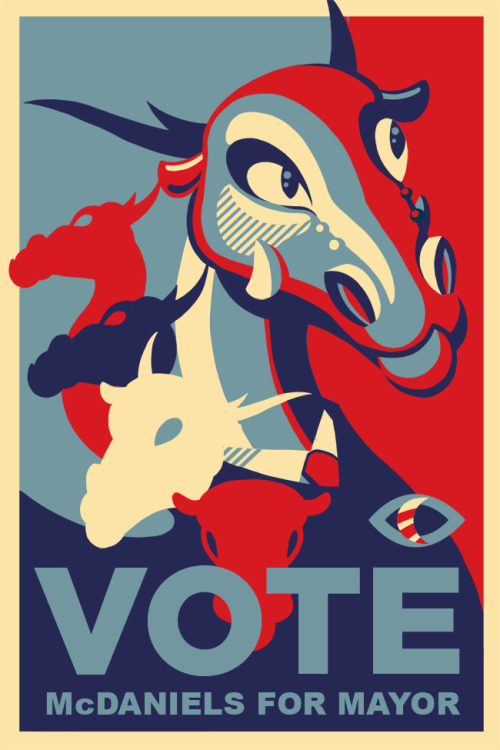
This is not treated as a major event. Rather, the response is more akin to: “Cecil is gay. So what? We have a five-headed dragon running for mayor, a glow cloud dropping dead animals on everyone, doppelgangers running around, a dog park with mysterious hooded figures that we are not allowed to enter, and so many other strange things that really, Cecil being gay is a non-issue.” That is exactly how the show treats it. Cecil never mentions being ostracized for his homosexuality. He never goes on tirades about his sexuality or makes it seem like identifying as gay has really altered much about his life.

The listeners only discover he is gay when he mentions Carlos (“beautiful, sweet Carlos”) at which point most listeners usually react with, “Is he talking about another guy?” Cecil and Carlos eventually, after many episodes of Cecil gushing about the scientist and condemning the hairdresser who cut Carlos’s hair, end up in a relationship. This relationship is not treated as anything extraordinary, although Cecil is very excited about it. Rather, it is given the same importance and weight as any heterosexual relationship. One might remark that Cecil/Carlos is the only normal thing about that town.

This seems like a marked contrast to Glee. In Glee, Kurt’s homosexuality is a focal point. He behaves like the stereotypical gay man, whereas Cecil behaves like any ordinary man, save for his fixation on Carlos. In this way, Cecil seems more human (although there have been fan art depicting him with tentacles) than Kurt. Cecil is more accessible than Kurt because Cecil, despite being just a voice on the radio, reacts less like a flat, two-dimensional character. He is not defined by his sexuality the way Kurt is.

This brings us to another moment. Quinn, as well as the jocks on the football team, condemn Finn for joining Glee because they think it is basically ‘homo central’. Anyone with disabilities or showing desire for the same sex is condemned (they locked the handicapped boy in a porta-potty and had intended to flip it over with him inside). The idea that such things are shockingly normal in a show like this unnerves me. Glee seeks to show how all these misfit toys belong together, yet it has not shown much solidarity beyond the club.

Again, I realize I may be misinterpreting due to my limited experience with the show. I have heard every single Night Vale podcast, over 30 of them, and have only seen two Glee episodes. Perhaps once I am ready to complete my final project, I will have had more exposure to the show that will alter my opinion.

I just wish that Glee treated Kurt (and Blaine, who comes in later) as unremarkable the way Night Vale treats Cecil and Carlos. Perhaps this is only possible in a town where “helicopters circle overhead and we all pretend to sleep”.

“Good night, Night Vale. Good night.”


Wednesday, November 20, 2013

Experiences regarding the midterm

            “It’s that time again!” “To play bubbles with our spit?” “No, to spin the Wheel of Morality. Wheel of Morality, turn, turn, turn. Tell us the lesson that we should learn. And the moral of today’s story is: ‘early to bed makes a man healthy, wealthy, but socially dead’.” ~Animaniacs
            Working on the midterm was definitely an experience. After hearing the professor talk about how it involved democracy and that we should have read all the readings, I had visions of an open book test involving discussing every single reading, in depth, with the option of picking one we would focus on. I saw myself sitting on a computer with pages around me while I hurriedly tried to figure out what went where and whether I had enough time to reread any of the articles. Open book tests usually mean you should know the material beforehand so you can reference it freely. Since I had not studied for the midterm, I worried that this might be the case.
            After discovering that the midterm was an outgrowth of another assignment, I first felt relieved. Then I realized, with the sheer enormity of the task, that there was no way one person could complete all of it. At least, it seemed unfeasible. I thought, however, if the class decided to do it individually, perhaps this meant that I would have to figure out a way to handle it. Again, I was relieved when I discovered we decided to do it as a class. This involved much less work.
            However, the midterm still seemed insurmountable. Having the entire class work on it is daunting, regardless of divided workload. After discussing this midterm with my father, he said that if an entire class worked on a midterm, it had better be a good one. My confidence wavered and I grew anxious. I had not given enough material to the midterm. I was not contributing my feedback. I let others do the work. Therefore, I had failed my part.
            I managed to muster support for performing certain parts of the midterm and having tasks delegated during class helped a lot. In the future, though, I believe such endeavours may be better suited for group work that builds into classwork. Yes, as a democracy, this demonstrated how each person could pull his or her weight (or not) and permitted each of us to use his or her own skills to the task. It still feels too much like a vast undertaking and I admit that I am humbled by the whole assignment. I also admit that after having completed an assignment like that, I am not eager for another one. Anxiety is not your friend.
            I wonder what this portends for the final project and whether students will choose to work in groups again rather than individually. For students who felt that the midterm experience was cumbersome or nerve wracking, they may decide to work by themselves. I suppose this is a “time will tell” measure. It should be interesting to see what my classmates come up with.


LGBTQ youth and democracy

            For my final project, I intend to research LGBTQ youth in public schools and their experiences. Since I attended high school, rules and regulations regarding bullying have grown more stringent. Bullying, as per our class discussion a while back, seemed like a rite of passage. Students bullied each other until one person stood up for himself or herself and put a stop to it. Once that happened, they were left alone. Unfortunately, such advice did not work as well in my experience. Given the ten years since I left high school, I can only hope things have improved since then.
            For our midterm, we wanted students to feel included and to feel like their desires and interests were valued. Since our midterm represented an ideal, it is easy to see how such things might not play out well in real life. In the south, particularly, racism and homophobia are very common. While I had expected this to some degree, I believe living in the north isolates one from the prejudice that certain southerners encounter daily. Democracy and equality only work as well as the dominant force wants them to work.
            I confess I have only watched the first couple minutes of the documentary I intend to use for class. However, it starts out worryingly. The first words on the screen read “they said they wanted to play ‘capture the fag’”. At first blush, I thought this might be a typo. Surely no one would do that now. It reminds me of a line from The Simpsons—“…And this will be one nation, under the dollar, with liberty and justice for none...” (Mr. Lisa Goes to Washington). In the episode, all the wrongs were righted because of how her public display showed that children lost their faith in democracy. In real life, things do not work out quite so neatly.
            Yes, there are projects like “It Gets Better” out there to help LGBTQ students cope with their identities and problems they have in school. As per an article on Wired.com, there are problems with this message. For all that it seems helpful, there is a limited amount that it can really do. Savage, the founder, insists that it gives hope. Yet, is hope really enough to stem the tide of prejudice? What kind of things are we telling our kids when they see other children bullying them for something they cannot change?
            On the plus side, this did allow for Stephen Colbert to have a candid moment, out of character, on YouTube about It Gets Better. Perhaps, with voices like this, the project can, as Savage points out, imbue the LGBTQ youth with the hope they need to fight the prejudice. It still feels to me like holding a candle against the oncoming darkness.